Exclusive: Why Kayode Egbetokun Was Forced To Resign As IGP
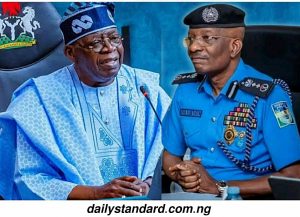
The Inspector General of Police (IGP), Kayode Egbetokun, has resigned from his position.
Media reports say Egbetokun submitted his resignation letter on Tuesday morning.
President Bola Ahmed Tinubu appointed Egbetokun as IGP to replace Usman Baba on June 19, 2023, and he was subsequently confirmed by the police council in October 2023.
Egbetokun ought to have retired on September 4, 2024, upon reaching the mandatory age of 60, based on civil service rules, but in July 2024, the National Assembly passed a bill to amend the Police Act 2020 to allow the IGP to remain in office until the end of the term stipulated in his appointment letter.”
The latter part of Egbetokun’s tenure was marked by controversy over his extended stay in office, which drew public criticism.
Under Section 18(8) of the Police Act 2020, Egbetokun, who was born on September 4, 1964, was expected to retire in September 2024 upon attaining the age of 60.
But his tenure extended beyond the mandatory retirement limits of 60 years of age or 35 years of service, prompting sustained criticism from civil society groups, among others.
Critics argued that the extension breached established police service regulations and weakened institutional discipline.
However, the police maintained at the time that the development did not amount to an extension but was a confirmation that he would complete the four-year tenure stated in his original letter of appointment.
In July 2024, the National Assembly passed the Police Act (Amendment) Bill to allow a person appointed as Inspector-General of Police to remain in office until the end of the term stipulated in the letter of appointment.

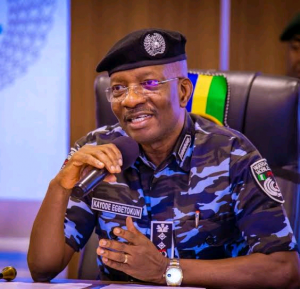

The resignation of Kayode Egbetokun as Inspector-General of Police appears to be closely tied to political authority and institutional power within Nigeria’s security system. According to reports, he stepped down after a meeting with Bola Ahmed Tinubu, who reportedly instructed him to resign and make way for a successor, believed to be AIG Tunji Disu. In Nigeria, the Inspector-General of Police serves at the discretion of the president, meaning the office can change hands through presidential directive rather than through an independent process.
Nigeria Police Force leadership transitions therefore often reflect broader political calculations within the presidency.
Beyond legal debates, the resignation also reflects the broader dynamics of Nigeria’s security challenges and leadership restructuring. The police force has faced criticism over rising insecurity, kidnappings, and public distrust, issues that often lead presidents to reshuffle security leadership to signal reform or renewed strategy. In such contexts, a change at the top of the police hierarchy can serve both political and symbolic purposes—allowing the government to present a fresh approach to policing and security management.
Consequently, Egbetokun’s resignation can be interpreted not simply as a personal decision but as part of a wider recalibration of security leadership under the Tinubu administration.